Neurodiversity Celebration Week offers us a powerful reminder of the value that different ways of thinking, learning and experiencing the world bring to our communities. As a Trust dedicated to empowering pupils with SEND, we know that inclusion is a value we need to live every day. That commitment extends beyond our classrooms and into the support we offer every member of our team.
This week, we’re proud to spotlight five colleagues from across our Trust who are sharing their own experiences of neurodiversity. Their reflections highlight not only the strengths and unique perspectives that neurodiversity brings to education, but also the practical ways our academies have adapted to ensure that every colleague can thrive.
Their stories remind us that schools where everyone feels understood, supported, and valued mean that both adults and pupils can be their authentic selves. By embracing our own diversity as staff, we also become powerful role models- showing our pupils that neurodiversity is something to celebrate.
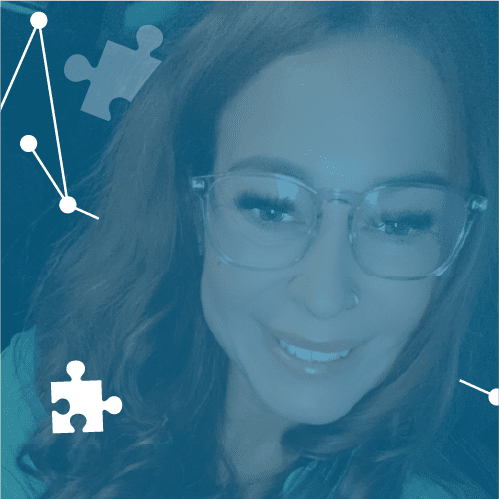
Monday
Shana Hooper

Tuesday
Kerry MacDonald

Wednesday
Christine Demetriou
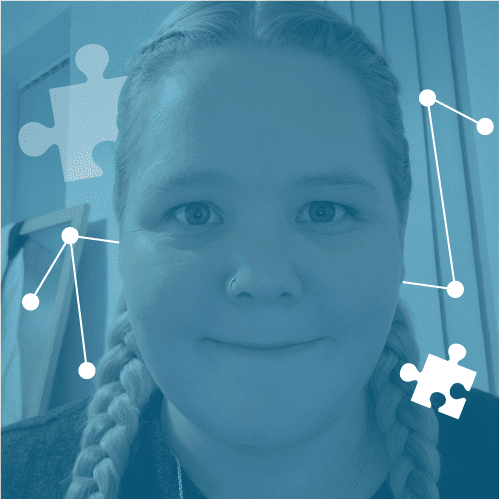
Thursday
Georgia Sims
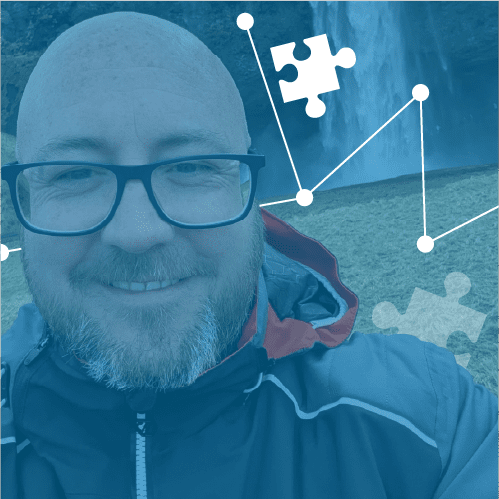
Friday
Jason Haden
My name is Shana Hooper and I am a proud Year 3 teacher who brings my whole self into the classroom every day. I live with ADHD and have a diagnosis of ASC . These are not things I hide — they are part of what makes me, me. I am open about both my strengths and my challenges, and I am passionate about advocating for children and adults within the teaching profession.
Being neurodivergent gives me a unique and valuable perspective, particularly when supporting children with Special Educational Needs. I understand first-hand how a classroom environment can sometimes feel — the sensory overload, the need for structure and the importance of feeling understood. This insight allows me to approach teaching with empathy, flexibility and creativity.
In my classroom, you will notice thoughtful adaptations that support both me and the children. Each morning, calming instrumental music plays as the children enter, creating a gentle and welcoming start to the day. In the afternoon, we take part in mindful sessions to reset and refocus. Around 2pm, I dim the lights to reduce the impact of artificial lighting, which can be overstimulating. These adjustments not only support my sensory needs but benefit the whole class, helping to create a calm, regulated learning environment.
I value teamwork and self-awareness. Support from my mentor helps me to “park” tasks that are not urgent, preventing overwhelm and allowing me to prioritise effectively. Teaching is demanding and recognising strategies that help me stay organised enables me to give my best to the children.
I am especially passionate about working with families. When parents share concerns, I genuinely understand the emotions that can come with that journey. I strive to create a space where families feel listened to, reassured, and supported.
Above all, I want every child — and adult — to feel safe to be themselves. When we create inclusive classrooms and workplaces where differences are respected and celebrated, everyone can flourish. Our uniqueness is our strength, and together we can build a community where every individual feels valued, understood and proud of who they are.
I am who I am – and I make a difference.
 Shana Hooper
Year 3 Teacher, Jubilee Academy Mossley
Hello, I’m Kerry. I am the Administrator / Receptionist at Great Heath and the wrong side of 40. I have always referred to myself as Marmite – you will either love or hate me! I wondered why I am the way I am ( I actually annoy myself) I interrupt people while they are talking, I finish their sentences, I forget my words and lose EVERYTHING – I spend hours a week looking for car keys, my phone, pens all sorts. At work I would start a task, answer the phone, then forget I was working on something and go onto something new – My whole life was a confusing bubble. These are not occasional things, these are multiple times a day every day.
Working at Great Heath I started learning more about isums. One that kept resonating with me was ADHD. Things slowly started making sense. Huh so I wasn’t a complete wally – I had a chat with the SENDCO to learn more.
In September 2025 I was finally diagnosed with ADHD and scored a perfect 20/20 (which is amazing as I never score 100% in tests!)
Now I know why I am who I am trying hard to love and organise myself, slow down and bite my tongue when someone is talking. I love a list – at home and at work I make lists of things I need to achieve that day. I even put on basic things like end of day messages at work or sort my sons uniform for the next day – these are daily events but if it’s not written down I am likely to forget, I always make sure I have a pen and paper with me to write down anything the other staff members ask for, or to relay messages from parents. I try to keep to routines and make mundane tasks fun. I can get overwhelmed at times, trying to work with constant interruptions with the phones going or visitors / parents coming to the school – yes they are all part of my job and I love everything my job entails but some days it’s hard to focus and get things done. If I have an urgent task that needs focus I might pop on some earphones, quiet calming music this helps me reset, focus and complete the task. Just a quick half hour to focus stops the task lingering all day and stressing me out. Other things that help are daily exercise and walks (and my dog) – these reduce the excess energy that keeps my brain buzzing.
I am very lucky to work for a wonderful school with amazing colleagues who understand the struggles and accept me for me.
 Kerry Macdonald
Receptionist & Administrator, Great Heath Academy
My name is Christine Demetriou, and as a dyslexic leader at Kingsmoor Academy, my journey has deeply shaped the way I lead, think, and support others within our school community. Dyslexia gives me a powerful blend of creativity, empathy, and big‑picture thinking, enabling me to approach challenges with fresh perspectives and build strong, supportive relationships with pupils, colleagues, and families. These strengths help me champion inclusive practice, model resilience, and demonstrate to our children that there are many different—and equally valuable—ways to learn and succeed.
Over time, I have developed the confidence to engage in open and honest conversations with colleagues about my neurodiverse needs. Being transparent has not only helped me feel understood and supported, but it has also encouraged a wider culture of openness across the school. When others see me advocating for what I need to thrive, it gives them permission to do the same, strengthening our culture of trust and belonging.
Alongside these positive aspects, dyslexia can sometimes bring significant cognitive fatigue. Tasks that require sustained reading, writing, or intense processing often demand far more mental energy than they may appear to on the surface. This can result in periods of complete exhaustion, not through lack of ability, but because of the sheer amount of brain power required to work through certain tasks. Acknowledging this has been key to maintaining my wellbeing and working in a way that is both healthy and sustainable.
Kingsmoor Academy provides several thoughtful adaptations that make a meaningful difference to my day‑to‑day work. These include receiving written information in accessible formats, having agendas and key documents shared in advance, and using assistive technology such as speech‑to‑text. When I am working towards tight deadlines, having the flexibility to work from home is incredibly valuable, giving me the calm, focused environment I need to be at my most effective.
These adjustments enable me not simply to cope, but to flourish—showing our pupils that neurodiversity is a strength that enriches our whole community.
 Christine Demetriou
SENDCo at Kingsmoor Academy
If you’d told younger me that one day I’d be writing a blog about celebrating myself and my diversity… I would have laughed. Or cried. Or both. Because for most of my childhood, those parts of me felt like things I was supposed to apologise for.
Hi, my name is Georgia, and I wear many neurospicy hats. I am Autistic, ADHD. I have Dyslexia and Dyspraxia. And finally, Tics.
All these things make up who I am though for most of my early life, I would have thought differently!
School was a battlefield. Not the dramatic movie kind, but the exhausting, confusing, “why am I always in trouble?” kind. I was the child who couldn’t sit still, who became overwhelmed by noise, who drifted off, who tried incredibly hard but still ended up being told off. I didn’t blend in, and it wasn’t my world- I masked to fit in.
I wasn’t diagnosed in childhood. I got my Autism diagnosis in 2015, and everything else followed. As a child, I was diagnosed with Dyspraxia and Dyslexia at university, but even then, it didn’t explain everything. I remember being in Primary school and hearing parents say to my mum at pick‑up, “Oh… you’re Georgia’s mum,” with that tone that made it clear I wasn’t the “normal kid.”
In secondary school, I was told I wouldn’t get into sixth form. Then I was told university wasn’t realistic to try an apprenticeship. And in my final year, the Dean of Education suggested I defer because I was struggling.
Well… spoiler alert:
I did get into sixth form.
I did get into university.
And I didn’t defer with the incredible support of the learning support team; I pushed through and graduated with a high 2:2 and a BA in Education! Something I’m deeply proud of, not for the grade itself, but for the journey behind it.
Since then, my life has come full circle. I’ve gone from the girl always in trouble to the adult supporting children who feel exactly how I once felt. I’ve worked in nurseries, special schools, secondary schools, and now at North Walsall Primary Academy where everything finally feels like it fits. NWPA has been different. I’ve never felt so understood or supported. My colleagues don’t see my neurodivergence as a challenge they see it as a strength. And that has meant everything.
I celebrate my diversity now. I celebrate them by being open about who I am, by using my lived experience to support children, and by showing them that being different is something powerful not something to hide!
In my Teaching Assistant role, I adapt everything I do. I use visuals because they help me too. I create calm, predictable routines because they support both my regulation and the children’s. I offer movement breaks, sensory strategies, and flexible expectations because I know how important they are. And most importantly, I always connect before I correct with the children!
I’ve overcome a lot. But what matters most now is using every struggle, every misstep, every success, to help my pupils feel understood in a way I never did.
Because I don’t just understand their needs I’ve lived them. And now, I get to help my pupils thrive while also offering encouragement to parents knowing about my own neurodivergence gives them a little bit of hope.
This is why I’m here, and why I feel so proud to be neurospicy.
 Georgia Sims
Teaching Assistant, North Walsall Primary Academy
It was an after-school performance of a Year 9 drama piece that really opened my eyes about neurodiversity and it all unfolded in the space of about 20 minutes. The students had prepared a piece around their struggles in the classroom – complete with taps, tics, kids shouting, adults standing too close… It was a powerful piece that was intended to highlight what the classroom was like for students with a range of neurodiversities. It ended up setting me on my own path of referrals and diagnoses.
Fast forward four years to a time where I’m now comfortable in discussing that I’ve since been confirmed as AuDHD.
Having a combined type comes with it’s own set of challenges; it seems that every day is a battle between one part of my brain that thrives on order and routine, while the other is forgetful and impulsive.
I’m open about my neurodiversities with both students and staff. It was another feature of that fateful play where it was mentioned that staff should be more honest about their own struggles. It’s not for everybody, but I’ve never seen the point in hiding who I am when the very act of raising awareness must surely make students look at certain staff and wonder.
It has also allowed me to co-found MCA’s dedicated after-school club for neurodiverse students, dubbed NeuroLogical. Some days it is simply a safe space to chat and talk about our struggles and successes. Others it’s about flying that flag and raising awareness throughout the Academy, the community, and we hope wider into the trust as well.
It’s been a privilege to watch out young people flourish when given the chance to truly be themselves, and I hope that reading these blogs inspires you too.
 Jason Haden
Geography Teacher, Mildenhall College Academy
Learn More About Our Approach to Inclusion
At ATT, we believe it is our responsibility to transform life chances for all learners; we strive to create positive and inclusive learning environments with high expectations for children with SEND.