Practical Insights for Primary Leaders Preparing for the New Ofsted Framework
Is your primary school anticipating an Ofsted inspection under the new framework? If you’re not sure what to expect, the recent experience of colleagues at our Iceni Primary Academy can help guide your preparations.
Following our recent webinar “The New Ofsted Framework: A Primary Experience”, we’ve brought together the most valuable insights shared by the school’s leaders and Trust specialists. Here we’ve distilled the key messages for primary, EYFS, SEND, safeguarding and MAT leaders preparing for the new inspection framework.
Understanding the New Inspection Rhythm
One of the first things our leaders noticed was the concentrated pace of the inspection. Inspectors arrived exceptionally promptly and began seeking detail almost immediately, particularly around pupils selected for case sampling. In smaller schools like Iceni Primary, where mixed‑age classes are common, inspectors might spend extended periods in single classrooms, allowing them to build a deep understanding of teaching sequences and pupils’ learning journeys. Staff must therefore be more prepared for sustained observation rather than brief drop‑ins, and leaders should expect frequent requests to contextualise what inspectors are seeing.
“It’s really important to make sure the person who leads these discussions can highlight the strengths and point out the reasons for the identified priorities.”
-Emma Owner, Principal at Iceni Primary Academy
This increase in pace means that leaders will benefit from having succinct pupil information at their fingertips. Being able to describe a child’s needs, context, progress and support swiftly helps maintain the flow of the inspection conversation and demonstrates secure oversight.
Ensuring Documentation Is Clear, Concise and Purposeful
Iceni’s experience highlighted the importance of having carefully curated documentation ready in advance. Inspectors will want to see evidence that leaders understand their school’s priorities, track the impact of actions and respond to feedback from pupils and parents. Documents such as curriculum overviews, long‑term plans, participation data for disadvantaged groups, improvement priorities and survey information provide the backbone for these discussions.
The underlying expectation is that leaders can explain why decisions have been made, how they relate to the school’s context and what difference they have made. This is not about quantity but clarity: inspectors want documentation that genuinely informs practice rather than large volumes of paperwork.
What Subject Leadership Now Looks and Feels Like
Although the new framework has moved away from formal “deep dives,” subject leaders should not assume that scrutiny is lighter. The subject conversations remain rigorous and require primary subject leaders to articulate a coherent narrative about their subject across the whole school. This includes being able to explain why particular schemes or pedagogical approaches were chosen, how consistency is maintained between classes and what impact these decisions have had on pupils’ outcomes.
“This is your opportunity to prove you’re an expert in your own subjects. So make sure you show off your knowledge, ensuring that you know and can share what is happening in every class in your school with regards to your subject.”
-Emma Frost, Teacher at Iceni Primary Academy
Evidence of impact remains critical. Even simple internal data that shows a positive trend can help illustrate that development work is effective. At the same time, subject leaders are encouraged to be candid about any areas requiring improvement and to show how these are being addressed through action planning and monitoring.
Interpreting EYFS Expectations Under the New Framework
The inspection at Iceni reaffirmed that early years continues to be a significant focus. Inspectors looked for clear evidence that phonics teaching was consistent, that adults understood each child’s starting point and that provision was intentionally shaped around developmental needs. Continuous provision came under close scrutiny. Leaders needed to articulate the thinking behind each learning area; how it linked to curriculum plans, how children were expected to use the space and how adults intervened to extend learning.
“Inspectors were looking for and are looking for skilled adult interaction, purposeful questioning, conversations that move children’s thinking forward, adapting support and challenge”
Lisa Barrow
Inspectors also paid close attention to the needs of children at both ends of the attainment spectrum. They wanted to see that the most confident learners were being appropriately challenged, while children requiring additional support were given thoughtful adaptations and targeted opportunities. A strong understanding of every child, and being able to explain decision‑making confidently, is essential.
Safeguarding: A Deep and Forensic Lens
Safeguarding remains one of the most intensely examined areas. The new framework places considerable emphasis on safer recruitment, including meticulous checks of DBS records, references and any associated risk assessments.
Beyond recruitment, safeguarding conversations now explore the rationale behind leaders’ decisions, the accuracy and clarity of record‑keeping and the degree of professional curiosity shown in response to concerns. Inspectors triangulate information from several sources- case logs, pupil conversations, classroom observations and discussions with staff- to understand the strength of a school’s safeguarding culture. Leaders must be ready to explain why actions were taken, how decisions were monitored and what themes have been identified across the school’s contextual safeguarding landscape.
Viewing Inclusion as a Whole‑School Responsibility
One of the clearest messages from Iceni’s inspection was that inclusion is no longer seen as the sole domain of SEND. Inspectors look broadly at how schools support a wide range of vulnerable pupils, including those with low attendance, behavioural needs, looked‑after children, pupils with safeguarding records and those experiencing disadvantage. They evaluate the quality of learning plans, the appropriateness of targets, the level of challenge and support in lessons and the extent to which interventions make a tangible difference in the classroom.
“Ultimately, inspectors were determining whether inclusion was intentional, embedded and designed into the school’s culture – ensuring that every child thrives through the right support and the right mindset”
-Christine Franklin
This means all leaders- and many classroom staff- need to be able to speak confidently about the needs of key pupils, the strategies in place to support them and the principles underlying the school’s graduated response- therefore showcasing how inclusive thinking is woven through curriculum, assessment, pastoral structures and classroom practice.
Professional Development as Evidence of Effective Leadership
A significant shift in the new framework is the heightened focus on professional development within the leadership and governance judgment. Inspectors want to see that improvement priorities are well‑reasoned, that staff learning is coherently structured and that there are clear opportunities for teachers to practise and embed new strategies. Evidence of engagement beyond the school- through networks, professional communities or collaborative projects- strengthens this narrative.
Iceni’s use of our Institute’s Professional Development Curriculum helped demonstrate how staff development is sequenced, intentional and connected to wider school priorities.
The Evolving Role of MAT Leaders During Inspection
Trust‑level support played a significant role in Iceni’s inspection. MAT leaders helped with logistical planning, retrieving documentation, facilitating online meetings with governors and trustees, supporting safeguarding processes and even joining classroom visits when appropriate. The inspection framework is flexible in this regard; MAT leaders may take on responsibilities that lighten the burden for school leaders, particularly in smaller settings. What matters most is that the support is purposeful and helps the school demonstrate its strengths clearly and confidently.
Iceni Primary Academy’s experience with the new Ofsted framework offers reassurance that although the expectations are high, they are achievable with thoughtful preparation, strong internal systems and a culture of reflection. Leaders who know their school well, understand the rationale behind their decisions and can demonstrate intentionality in curriculum, safeguarding, inclusion and professional development will be well placed to navigate the new approach.
While the inspection process is undeniably demanding, it also provides opportunities for leaders to celebrate their school’s strengths. Being clear, confident and proud of the work already happening within the school can make a meaningful difference.

Join Our Next Free Webinar!
Beyond the Benchmark: Transforming Outcomes for Disadvantaged Pupils
Wednesday 22 April, 3:45 pm – 4:45 pm
Hear from leaders of three ATT academies amongst the top performing in the country for disadvantaged pupil outcomes about the strategies that have made a real difference in their schools.
Apprenticeships: Opening Doors to Diverse Careers in Education
As we celebrate National Apprenticeship Week, it’s the perfect moment to shine a light on the incredible apprentices across our Trust, and the careers they’ve developed.
Apprenticeships offer a pathway into a whole ecosystem of rewarding careers across education. Thinking about jobs in education immediately brings to mind classrooms and teachers, but behind every successful school and MAT is a network of talented professionals in student support, administration, HR, IT, finance, marketing, and more. Apprenticeships offer a powerful entry point into these roles, combining qualifications with real-world experience and continued professional development.
Across our trust, dozens of colleagues have begun their journey this way, and their stories speak for themselves.
From Apprentice to Leader: Tasha’s Story
Whilst undertaking my A-Levels, I decided that University was not the route I wanted to take. I started looking into apprenticeships instead, so I could get hands on experience in a working environment whilst enhancing my education. I found that ATTFE were seeking an Admin Apprentice and secured the position in September 2012. I completed my Level 2 Apprenticeship in Business Administration and was offered the chance to stay a further year, completing Level 3.
Upon completion of my apprenticeships, ATTFE tookme on as a permanent member of staff, and I have been given so many opportunities to progress in my role since. This included the chance to complete a Level 6 Business Management Degree Apprenticeship, in which I achieved a First Class Honours in 2021.
Apprenticeships have been so valuable throughout my career, enabling me to build essential skills to aid my development, build my self-confidence and progress in my roles supporting local communities through lifelong learning opportunities. Apprenticeships give you the knowledge and baseline understanding of topics that you can then put into practice in the working environment.
Overall, my journey within ATTFE has been transformational and could not have been possible without my initial apprenticeship.
 Tasha Price
Community Learning Manager, ATT Further Education College
Growing Through Lifelong Learning: Charlotte’s Journey
Undertaking an apprenticeship has played a significant role in supporting and shaping my career path. It provided a strong foundation by combining practical, hands-on experience with structured learning so that I could apply theoretical knowledge directly in a working environment.
Through the apprenticeships, I was able to build confidence, professional discipline and a strong work ethic. Working alongside experienced colleagues gave me valuable insight into best practice, problem solving and effective communication in the workplace. Learning on the job helped me to identify my strengths, refine career goals and make informed decisions about my career development.
With my role in further education, the apprenticeship has been valuable in helping me support lifelong learning. Experiencing learning as an employee and a learner enhanced my empathy and understanding of balancing study, work and personal responsibilities. This insight has directly informed my practice, enabling me to provide more meaningful guidance and tailored support.
Overall, the apprenticeship has been instrumental in my professional and personal growth. It has equipped me with a strong commitment to lifelong learning of which will influence my role and impact within the sector.
 Charlotte Birch
Level 3 Learning Manager, ATT Further Education College
Apprenticeships Across the ATT: Real Voices from Real Colleagues
ATT apprenticeships span a wide range of roles, and the experiences of our current and former apprentices highlight just how varied and rewarding these opportunities can be.
IT & Digital Support
Alex Leung began as a Level 3 Infrastructure Technician Apprentice- he says his apprenticeship provided “the opportunity to gain hands-on experience and learn from my colleagues, who supported me throughout my journey.” Alex progressed quickly, first to ICT Technician, then Network Manager within two years.
SEND & Classroom Support
Lucy Leaman, a Level 3 Teaching Assistant apprentice, describes her apprenticeship as the gateway to a fulfilling career: “It opened the door to a career in education… and allowed me to consider how I’d like to progress moving forward.”
HR & People
Simone Kerr, completing a CIPD HR Level 3 apprenticeship, values gaining professional knowledge alongside lived HR experience.
“My apprenticeship is providing me with knowledge on employment law/legislation and human resource practices that I reference every day”
Faith Mills, a Level 3 HR Recruitment Apprentice, highlights the independence and breadth of learning available, telling us it’s “providing learning resources, tools and information that can be applied to my role and wider HR work”
Senior Leadership
Aminah Javed, an Assistant Principal completing a Senior Leader MBA Professional Apprenticeship, said her course provides “opportunity to connect theory with the real complexities of education and school leadership.”
The apprenticeship has given me structured time to reflect on practice, learn from evidence and research, and apply this learning directly […] next steps are to take on increased leadership responsibility that supports sustainable improvement and positive outcomes for pupils”.
These stories reflect a common thread: apprenticeships provide a strong foundation, meaningful support, and the confidence to grow.
Why Apprenticeships in Education Matter
Apprenticeships open the door to diverse career paths- from IT and administration to HR, community learning and curriculum design. They offer paid, practical experience alongside accredited qualifications, helping apprentices build confidence, professionalism and a clear sense of direction in their careers. Within our Trust, offering apprenticeships allows us to support talent development and is a significant part of our award-winning PD offer.
We’re proud to support all our amazing apprentices, who bring fresh perspectives, emerging skills and new energy into our teams!

Take Your First Step: Explore Our Apprenticeships
Whether you’re just starting out, exploring a career change, or looking to develop new skills while you work, an apprenticeship with our trust could be the perfect next step.
Browse our current vacancies for apprenticeship opportunities, or learn more about our apprenticeship offer for colleagues.
Primary education continues to face a longstanding challenge: men remain significantly underrepresented in the workforce. In many schools, male teachers make up only a small proportion of staff; data from 2024 shows that men account for only 14% of primary teachers in state schools. Yet the presence of men in primary settings brings clear benefits for pupils, colleagues, and our wider community. Their visibility helps break stereotypes, widens children’s perceptions of who a teacher can be, and offers valuable representation- especially for pupils who may not encounter male role models elsewhere.
International Men’s Day offers an opportunity to highlight and celebrate the contribution male educators make across Trust, from classroom practice, to mentoring and leadership. Their work reflects our commitment to developing the next generation of teachers through our Initial Teacher Training and Early Career Teacher programmes. By showcasing the voices and experiences of men in primary education, we hope to encourage more people to consider joining this truly impactful profession.
One powerful example comes from Beck Row Principal Charley Minter, who shares the impact made by her colleague, Danny Smith, in his role as an ECT mentor:
As a passionate advocate for supporting men in primary education, Danny Smith brings enthusiasm to his role in developing and mentoring early career teachers (ECTs). With a focus on inclusive practice, Danny provides tailored coaching and professional development that empowers teachers to thrive both in and beyond the classroom.
Through his work with ECTs, Danny fosters confidence, reflective practice, and a strong sense of professional identity, ensuring that new teachers feel supported from their first day. His approach balances high expectations with empathy, creating an environment where teachers can take risks, share experiences, and grow collaboratively.
Danny’s impact is evident in the engagement and effectiveness of the staff he supports. By modelling outstanding teaching and nurturing professional curiosity, he inspires both colleagues and pupils, highlighting the invaluable role of men in shaping inclusive and dynamic primary education.

-Charley Minter, Principal at Beck Row Primary Academy
Danny’s work illustrates the value diversity in roles that shape and support the careers of new teachers. As teacher recruitment becomes an increasingly important, mentors like Danny strengthen the profession by helping new teacher build resilience, skill, and confidence.

This commitment to developing new teachers is also central to the work of James, our Institute Professional Learning Lead. His experience as an ITT mentor highlights both the joy and the responsibility of guiding trainees in a field where men are still a minority.
Being a lead mentor on the Ambition ITT programme has been one of the most rewarding aspects of my role in education, particularly my work in the primary phase where men are underrepresented. Supporting trainees as they navigate the challenges of the classroom and grow into confident, reflective practitioners is a privilege.
Mentoring is about more than passing on strategies, it’s about modelling professionalism, empathy, and resilience. It’s especially powerful in primary settings, where male role models can help shape inclusive, nurturing environments for children. For male trainees, having visible, supportive mentors can make a real difference in a profession where they’re often underrepresented.
On International Men’s Day, I’m proud to celebrate the mentors and trainees who are helping to build a diverse and dynamic teaching workforce. The work we do together doesn’t just support new teachers, it strengthens our schools and the communities they serve.

-James Abley, Institute Professional Learning Lead
James’s reflections demonstrate how representation matters not only for pupils, but also for those entering the profession. Seeing men succeeding, leading, and thriving in primary roles can encourage others to take their first step into teacher training. Through our ITT and ECT pathways, we aim to provide the support, expertise, and role models needed to build a workforce that reflects the diverse communities we serve.

Primary Principal Tom provides a further perspective- one rooted in more than two decades of teaching experience. His story captures the long-term influence male educators can have on the lives of their pupils.
Teaching is like no other job, with all of us who work in schools being role models and members of the community. However, being a man in education, especially a man in primary education immediately places you as a role model for pupils, especially those who do not have a male role model at home.
Having worked in primary education for 23 years, it has been a privilege to work with hundreds, if not thousands of pupils, making a positive impact on those children and their lives.
Recently, I was in a supermarket and heard my name shouted from the other side of the store. Running towards me was this 18 year old man – someone I had taught in their Reception year. Excited to see me and tell me about what he was now doing, as well as to introduce me to his girlfriend, was somewhat of a bizarre experience as I stood there with my basket, but an experience that happens again and again. In what other profession would you be held in such high esteem and have such an impact on another human…or thirty! Moments like these remind us of the difference we make.

-Thomas Garner, Principal at Caldmore Primary Academy
Tom’s experience captures a core truth about teaching: the impact lasts far beyond the classroom. His story is a reminder of the value that our male colleagues bring to primary education, not just as teachers, but as trusted adults who can influence a child’s confidence, aspirations, and sense of belonging.

As we mark International Men’s Day, we celebrate colleagues like Danny, James, and Tom, whose work strengthens our schools and supports the next generation of teachers. Their contributions demonstrate the importance of representation, mentorship, and leadership across the primary phase.

What Could You Bring to Teaching?
If you’re considering a teaching, click here to learn more about our Initial Teacher Training Programme. Your perspective is valued, your presence matters- and your impact could be profound!

National TA Day – A Time for Reflection and Celebration
by Abi Joachim
Institute SEND Specialist
National TA Day is an opportunity for schools across the UK to reflect on the work of teaching assistants and “…a time to celebrate their achievements and raise awareness of their impact”.
Having worked as a secondary Teaching Assistant (TA), and later Higher Level Teaching Assistant (HLTA) for English, for over twenty years, I know first-hand how valuable and rewarding the role is. I was fortunate to have the opportunity to experience excellent professional development and know how essential this is for success. I am privileged to now have the chance to ensure the same professional development journeys are available for my colleagues through my Institute SEND Specialist role leading on PD for pupil-facing support staff across the Trust. At ATT, TAs, LSAs (Learning Support Assistants) and HLTAs perform the vital role of removing barriers to learning and therefore enabling education for our students.
As a Trust, we have adopted Judith Carter’s Essential SENCO Toolkit as a strengths-based framework providing a shared language of learning and assessment and a guide to adaptive practice and identification of need. Within this framework, the 4 Functions of Leaning Support codify teaching assistant support into four key roles: providing mediation, reinforcement of a skill or learning behaviour, carrying out an assessment and delivering an intervention. This aligns with the new EEF ‘Deployment of Teaching Assistants’ guidance report, which organises its five recommendations for schools into ‘effective practices’ and ‘effective implementation’, highlighting the integral role of leaders, teachers and teaching assistants themselves.
In order to assist our academies to engage with this evidence-informed approach and ensure high-quality support, we have created the ‘Teaching Assistant Deployment and Practice the ATT Way’ to offer guidance around best practice. This is supported by the Maximising the Practice of Teaching Assistants (MPTA) training programme, which enhances the practice of teaching assistants, focussing on developing pupil independence, while upskilling teachers to effectively deploy and work collaboratively with them.
In addition to their role within the classroom, teaching assistants across ATT are involved in delivering one-to-one or small group targeted interventions, which research suggests have a positive benefit of between four and six additional months on average. Our SEND Core Offer provides a suite of evidence-informed interventions and assessment tools to facilitate the identification of need and support the removal of barriers to learning. Teaching assistants receive extensive and ongoing training, resources and professional partnership opportunities to ensure they are fully prepared for this role.
Throughout the year, new teaching assistants participate in a programme of professional development, alongside other members of staff in an Enabling Education role, to build their knowledge and skills in foundational areas, such as the science of learning, barriers to learning, SEND and safeguarding, through an extensive induction programme. Existing staff are then able to build on this secure base to enhance their expertise in specialist areas. The Teaching Assistant Community offers a platform for professional discussion and collaboration, where representatives from across the Trust work together to cocreate solutions to the common and persistent problems in education.
It is an exciting time to be in the teaching assistant profession as the career pathways apprenticeships provide are constantly growing and developing. As a Trust, we were fortunate to have had the opportunity to play an instrumental role in the development and launch of the Level 5 Specialist Teaching Assistant apprenticeship, through the trailblazer group, and are able to offer up-to-date advice and guidance to our leaders to ensure staff have the best opportunities to progress and grow at ATT.
The calibre and dedication of our amazing teaching assistants could not be illustrated better than through our own TES TA of the Year 2024, Jackie Rawson, from The Nicholas Hammond Academy, who “… is dependable and has consistently risen to the challenges the Academy has faced, supporting the pupils in their learning, and ensuring they meet their targets.”
Watching our teaching assistants grow and develop within their roles, carving out their own career paths – whether that be into teaching, HLTA roles, Assistant SENDCos or pastoral positions – and being recognised for their achievements, makes my job the best in the world (in my opinion).

Teaching Assistant PD with ATT Institute
We have a range of opportunities available for Teaching Assistants to grow and develop their skills. Visit our offer page and browse opportunities for Enabling Education Colleagues to learn more.
Inclusion isn’t just a concept at ATT, it’s a golden thread that weaves through every aspect of our organisation.
At our Trust, we believe that every child deserves to feel safe, supported, and seen and that inclusion must be designed into the very fabric of our schools. It’s something we are constantly working on and improving, based on an ever-evolving cycle of feedback from our community.

As we celebrate National Inclusion Week, we’re proud to share how we’re making inclusion intentional, strategic, and transformative through the way we train staff, design systems, and shape culture.
Embedding Inclusion into Everyday Practice
Inclusion by design means every colleague understands their role in creating inclusive environments. Across the organisation, we’re aligning our systems to ensure that inclusion is everyone’s responsibility. Here are just some of the ways that we are achieving this:
We’ve created a Graduated Response Toolkit to support our staff to tailor support for students with absence, working with a support first approach to systemically addressing the barriers to attendance. Last year we ran our first external #ATTendance event, to showcase the strategies that work and the Attendance Curriculum we’re building to support our approach by offering universal input that will make the difference.
We’ve invested in developing Emotion Coaching Trainers and experts at Bristnall Hall Academy, to support our wider teams to embed emotion coaching into daily practice, facilitating emotionally healthy conversations that promote healthy mental models for our young people. Safeguarding teams are embedding trauma-informed practice this year, ensuring that vulnerable students are met with empathy and understanding—fostering confidence so every child feels safe and known.
SENDCOs are supported with robust induction programmes and tools like the SEND Core Offer and Waves of Provision, helping them lead inclusive practice through effective resourcing and professional excellence.
These aren’t isolated initiatives, they’re part of a joined-up approach that ensures every student’s needs are met with skill, care, and consistency and these are implemented through the connected work of our inclusion-focussed communities.
Designing Inclusive Systems That Work
We’re redesigning systems to make inclusion sustainable.
Connection is the thread that binds our inclusive practice; when we connect meaningfully with pupils, families, and colleagues, we create the conditions for every child to feel seen, heard, and valued.
By designing systems that prioritise relationships, trust, and shared understanding, we’re ensuring that inclusion is not just a policy, but a lived experience for every learner.
“Inclusion is built into how we work, not just what we say.”
Our Behaviour Connection Plans and Attendance Connection Plans have been redesigned to focus on addressing the barriers to success, using the myriad of different tools we have to support students to meet their goals, through multiple pathways to success.
We’ve also developed a new Parent and Carer Partnership Plan which is co-constructed with staff from across the Trust and families to ensure support is personalised and collaborative, nurturing students to find strength through challenge and building our connection with families and the communities we serve.
These tools help us move beyond reactive support to proactive planning, so that inclusion is built into how we work, not just what we say.
Creating Inclusive Cultures Through Training and Leadership
Inclusion by design also means investing in people. We’re building strong leaders and professional excellence across the Trust:
DSLs and SENDCOs receive strategic CPD, including bespoke training on neurodiversity, trauma-informed practice, and safeguarding leadership, developing confident, capable professionals.
Enabling Education Colleagues (EECs) are offered role-specific training in areas like behaviour, attendance, SEND and mental health, empowering them to act with purpose and integrity.
We’re launching events like the #ATTendance Conference to celebrate best practice and share learning across the Trust and beyond. These allow us to value and empowering our staff and the excellent practice they’ve developed whilst heralding the progress of our students, underpinned by the support and guidance they receive from their families and communities.
This culture of professional curiosity and shared expertise is what drives real change, and our staff are making transformational changes every day.

Celebrating National Inclusion Week!
ATT Institute is proud to support our Trust’s strategic approach to inclusion! Click here to see how our professional development offer supports colleagues’ inclusive and adaptive practice.
Learn more about our Trust-wide approach to inclusion on our SEND & Inclusion page.
At Academy Transformation Trust (ATT), we believe in a simple but powerful truth: that the highest quality educational experiences for young people are made possible by empowering the adults who work with them. Our staff development strategy is not an add-on or an afterthought—it sits at the heart of our improvement journey, driven by the ATT Institute.
Through innovative, inclusive, and impactful professional development (PD), the Institute serves as the fuel for school improvement across our 22 academies. By offering tailored support for every role we ensure everyone has the tools and confidence to thrive. This blog explores how the ATT Institute delivers excellence in staff development, through a culture of collaboration, evidence-informed practice, and sustainable leadership. Alongside this, we hear directly from those at the forefront of this transformation.

Driving Improvement Through Development
At the heart of our approach is a clear vision: to transform life chances through sustainable, effective, and inspiring academies. We know this cannot be achieved without investing in the development of our people.
The ATT Institute leads this work, creating and coordinating the professional development offer across the Trust. It does so by aligning PD with a unique role-categorisation model: Leading, Delivering, Enabling and Supporting Education. This approach ensures all staff—whatever their role—receive development opportunities that are contextually relevant, role-specific, and practically useful.
Professional development is never ‘done to’ our staff. It is co-constructed, embedded in context, and underpinned by high-quality evidence. The result is a system in which everyone has a part to play in driving academy improvement.

Collaboration That Connects and Elevates
One of the most impactful features of our PD model is our Trust-wide professional communities. These communities include a diverse range of colleagues from across the “Leading”, “Delivering”, “Supporting” and “Enabling Education” groups. These communities create a rich culture of horizontal improvement, where ideas, challenges, and best practice are shared openly.
Communities operate within structured schedules that respect staff workload while promoting purposeful engagement. Community leads collaborate across academies, supported by Trust and Institute leaders, ensuring alignment in improvement priorities and mutual support in implementation.
Each academy has a Professional Development lead who liaises closely with the Institute team. These leads play a vital role in contextualising Trust-wide strategies, maintaining momentum, and promoting whole-academy consistency in a way that is responsive and sustainable.

Testimonial: Jack Dean
Assistant Principal, Pool Hayes Academy
Deployment of Teaching Assistants: Reflections on the New EEF Guidance
by Abi Joachim
Institute SEND Specialist
The EEF Deployment of Teaching Assistants guidance is designed to help school leaders make decisions about how to deploy their teaching assistants. It contains five evidence-based recommendations with an explanation of their impact. You can read the guidance online here.
As a leader of professional development for teaching assistants, the EEF ‘Making Best Use of Teaching Assistants’ guidance report has been integral to my work across the Trust, so I felt privileged and excited when I was asked to join the report review guidance panel last year.
The new ‘Deployment of Teaching Assistants’ guidance report was released on the 26th of March and, while the key messages remain the same, there is a greater focus on the implementation process and the role of leadership. The new guidance report has a reduced number of recommendations, with five overall compared to seven in the original report. They are divided into ‘effective practices’ and ‘effective implementation’.
The ‘effective practices’ refer to the deployment of teaching assistants to ensure they supplement – not replace – the teacher, engage in scaffolding practices to develop independent learning and deliver structured interventions, where appropriate. The ‘effective implementation’ recommendations then focus on the more strategic aspects of teaching assistant deployment, considering the need for preparation and training and engaging all staff.
This new guidance report includes a range of useful tools to consider the application of the recommendations in context and to reflect and plan for implementation. The use of vignettes, and accompanying calls to reflection, offer examples of teaching assistant deployment with questions to prompt thinking and discussion. In addition to these, there are also examples from practice and challenge statements to prompt teachers and leaders to reconsider approaches. Finally, the report highlights some sources of helpful resources and further support.
I believe that this new guidance report is essential reading for all leaders and teachers in education.
Teaching Assistant PD with ATT Institute
We have a range of opportunities available for Teaching Assistants to grow and develop their skills. Visit our offer page and browse opportunities for Enabling Education Colleagues to learn more.
Happy National Leadership Day from ATT Institute! At Academy Transformation Trust, we’re proud to have an amazing team of leaders who work hard to transform lives across our 22 academies.
To celebrate National Leadership Day this year, we asked our executive leaders to nominate a school leader who has recently made a transformative impact on their setting. Check out their answers below!
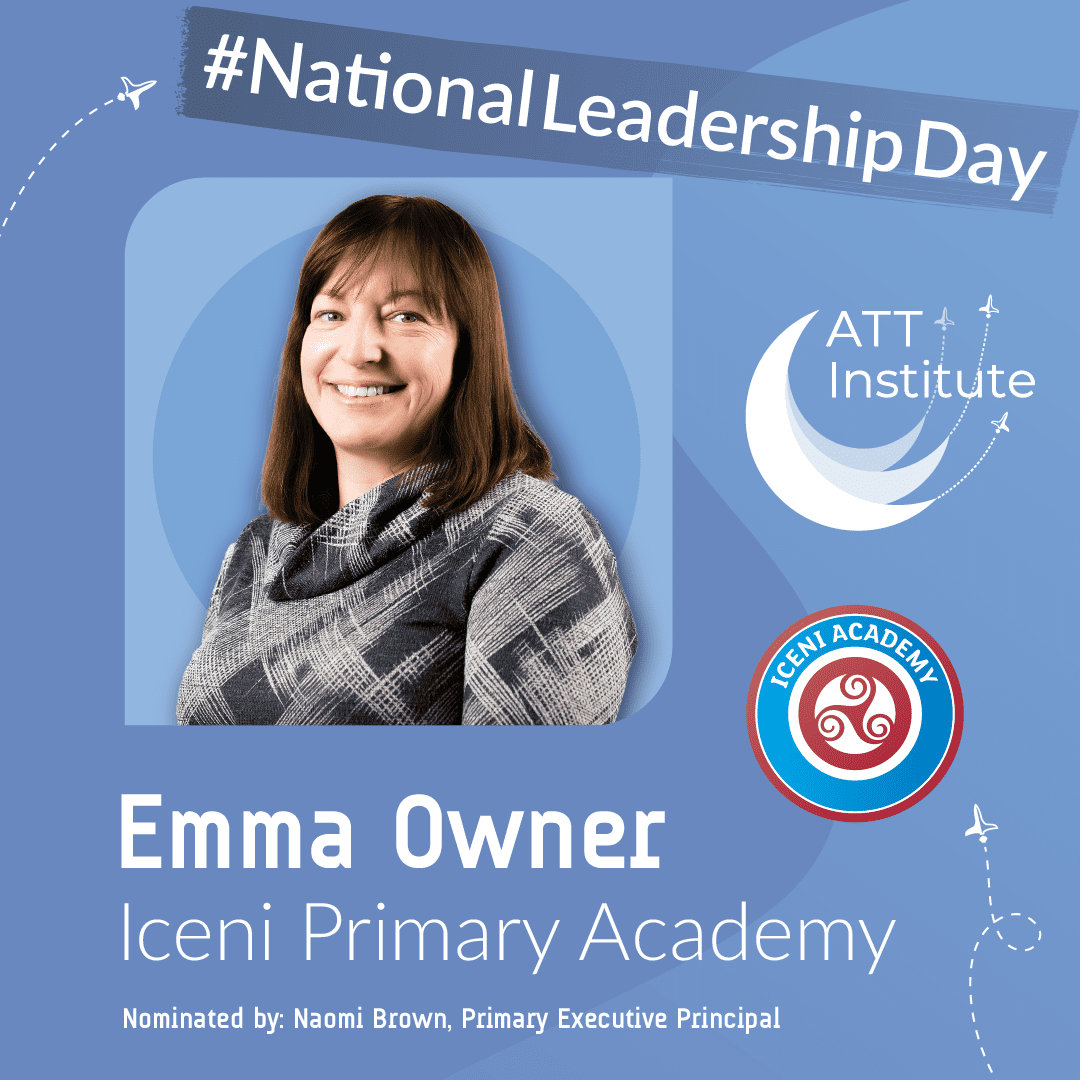
Emma Owner
Principal, Iceni Primary Academy
I have nominated Emma Owner for her exceptional leadership. She overcomes many challenges associated with running a small school and has created an amazing place to learn in Iceni Primary Academy. Her warmth towards children, staff and parents ensures the children thrive at the academy. Emma always has time to support colleagues and last year provided invaluable support to me in running Beck Row Academy in the absence of a Principal. She was a professional sounding board as we overcame the challenges we faced and her dedication to the school was paramount during the Ofsted inspection. We are lucky to have Emma as part of our leadership team.
-Naomi Brown, Trust Executive Primary Principal
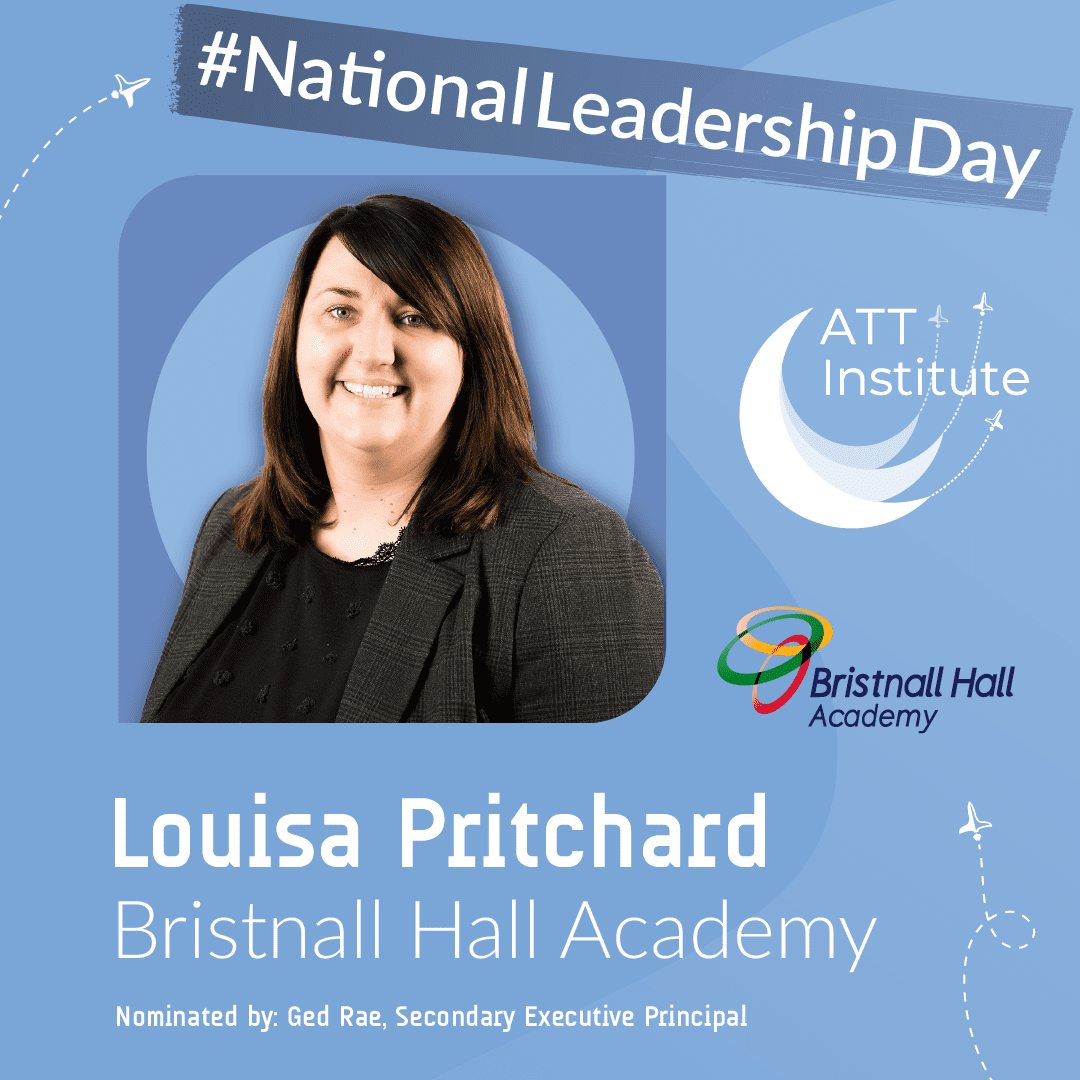
Louisa Pritchard
Principal, Bristnall Hall Academy
Bristnall Hall Academy has excelled under Louisa’s leadership. As well is being an innovative, highly motivated and impactful leader she is also an expert English teacher. Louisa prides herself in knowing every child, driving their individual ambition and ensuring their success becomes inevitable. Louisa leads by example, demonstrating the standards she expects from staff and leaders both in the academy and more widely across the Academy Transformation Trust. More recently Louisa’s leadership is influencing the wider educational sector through Bristnall Hall Academy’s involvement in the Exemplary Leadership Programme and South West 100 Programme.
-Ged Rae, Trust Executive Secondary Principal
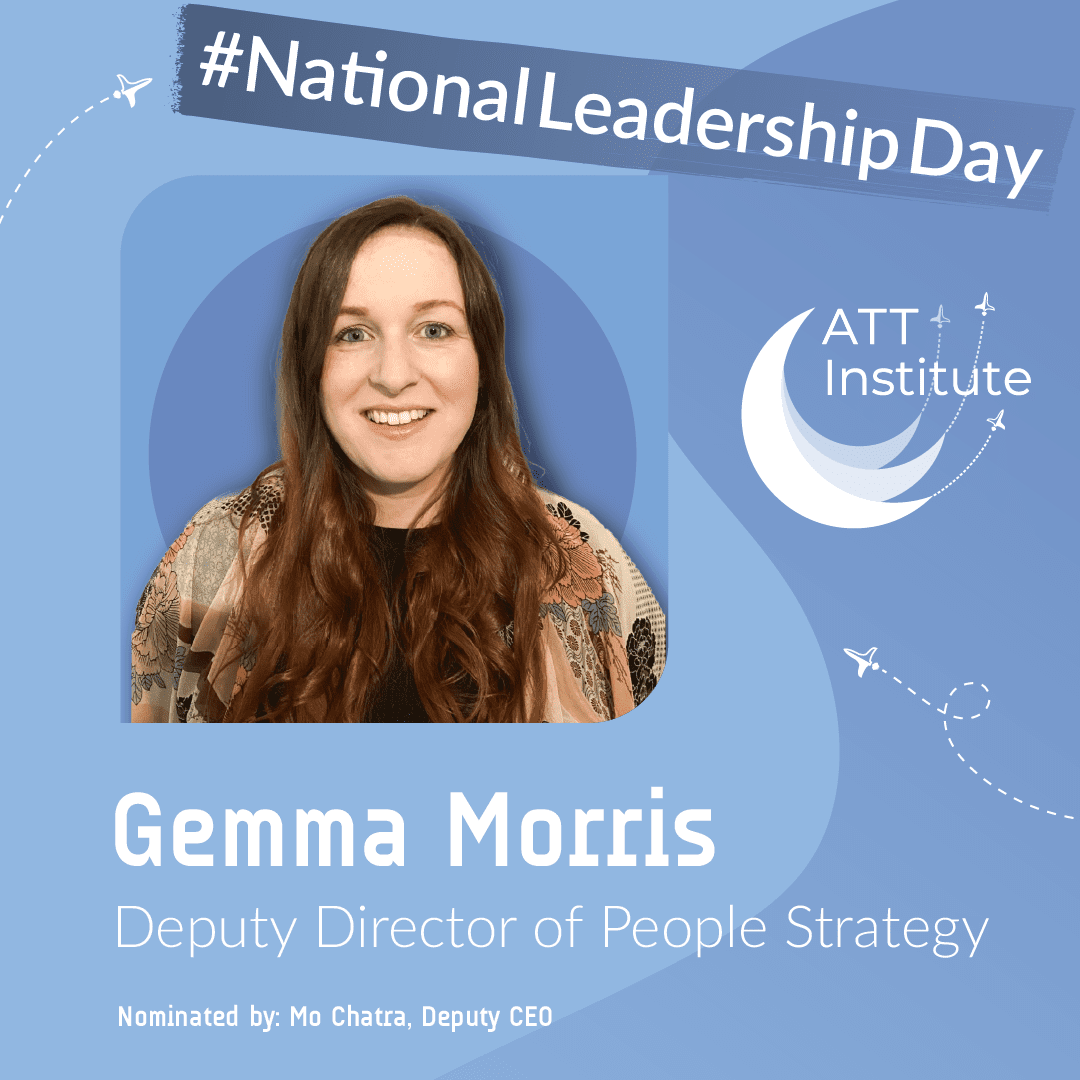
Gemma Morris
Deputy Director of People Strategy
I have nominated Gemma because she has played an integral role in HR becoming the strongest central supporting education service in the Trust. She has been loyal to the Trust for many years and has worked incredibly hard alongside Clare Plant with shaping the structure of the team and driving forward the implementation of the new HR and payroll system. She is a real asset to ATT.
-Mo Chatra, Deputy CEO
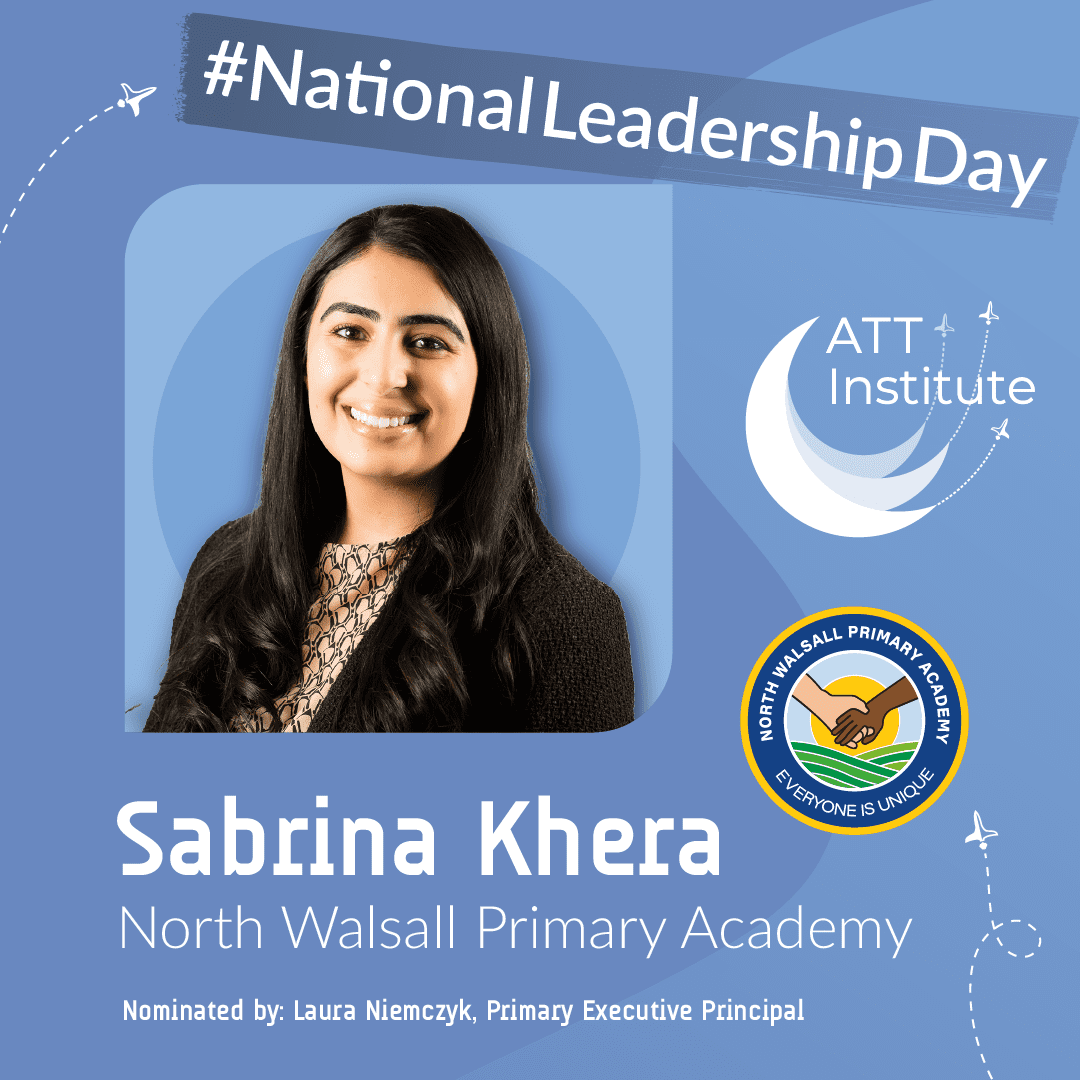
Sabrina Khera
Principal, North Walsall Primary Academy
Sabrina has a clear and compelling vision for the future, and her ability to see beyond the present allows her to create strategies that guide her team toward success. She values the input of all of her team, recognising their strengths and building a culture where all staff feel valued and buy into the North Walsall vision. Sabrina recognises the importance of each staff member’s professional growth and facilitates opportunities for all staff to develop as teachers and leaders; recognising successes and encouraging staff to recognise their learning when initiatives may not have the planned impact. She is an inspirational leader!
-Laura Niemczyk, Trust Executive Primary Principal
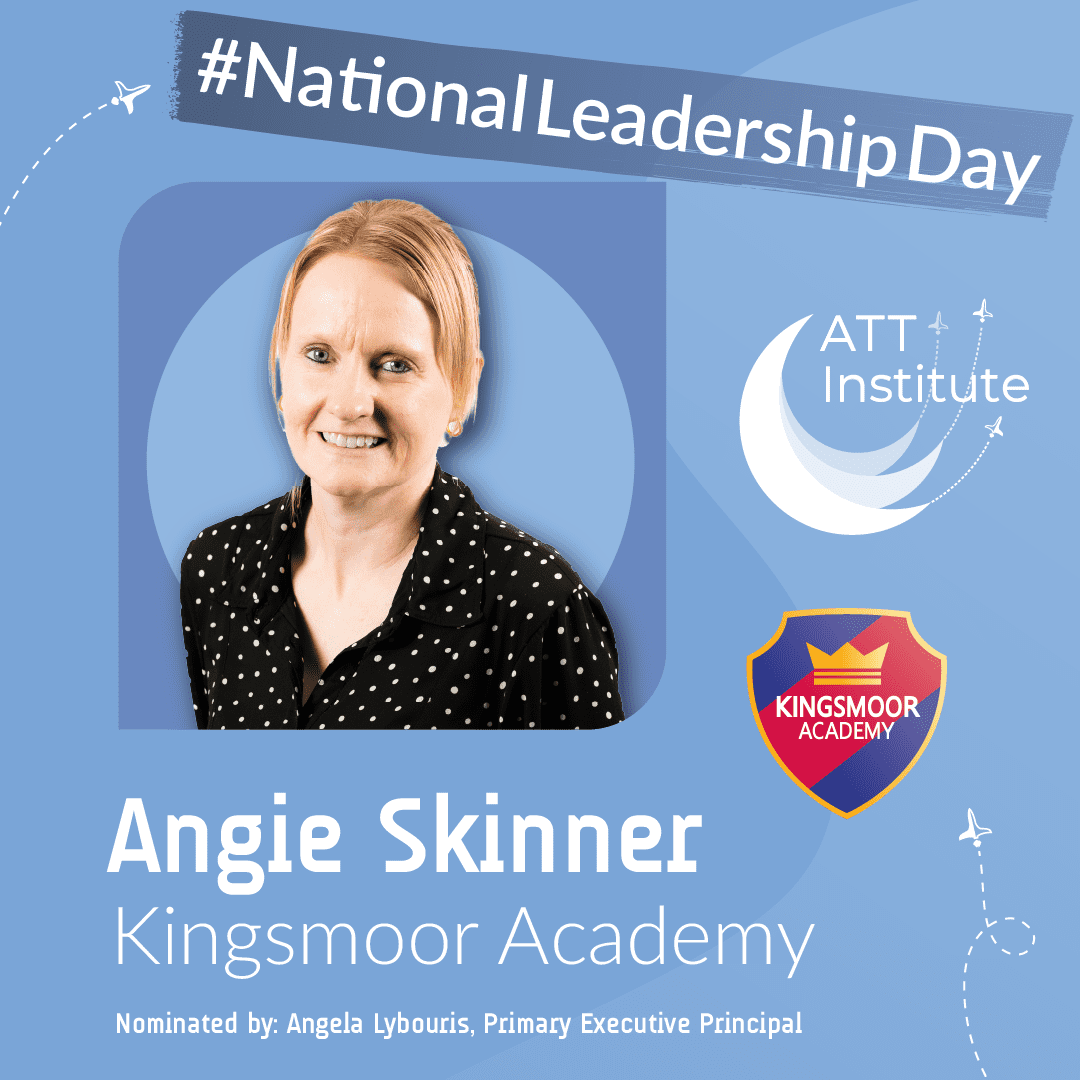
Angie Skinner
Principal, Kingsmoor Academy
Angie Skinner is an exceptional leader who combines a clear vision with compassionate leadership, fostering a supportive and inclusive school culture. She leads by example, communicates effectively, and makes decisive yet adaptable choices. By prioritising the well-being and growth of both staff and pupils, Angie has created an environment where everyone feels valued and is motivated to reach their full potential. Under Angie’s leadership, Kingsmoor Academy has continued to flourish, enabling every individual to thrive.
-Angela Lymbouris, Trust Executive Primary Principal
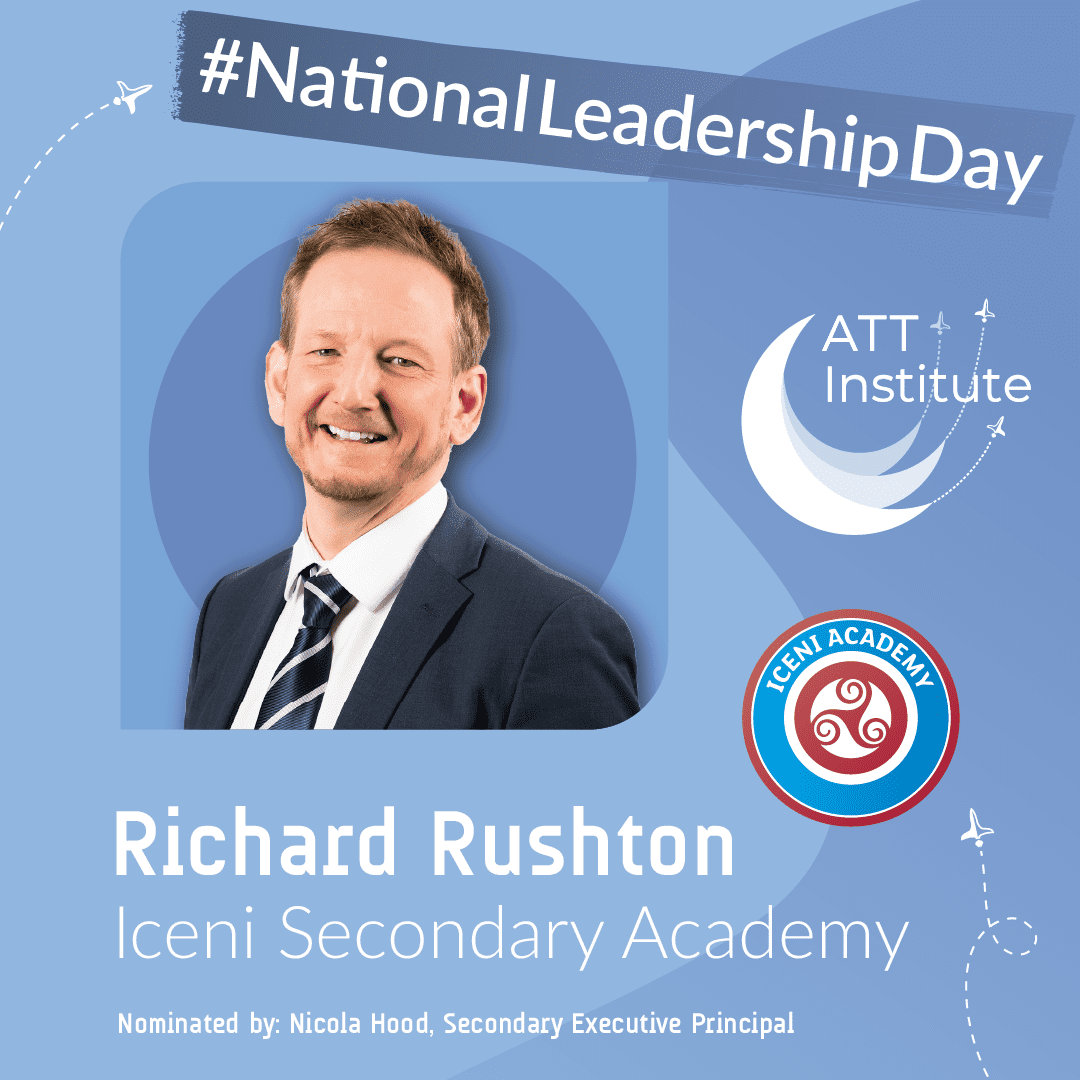
Richard Rushton
Principal, Iceni Secondary Academy
Richard has worked tirelessly to build on the hard work of him and his colleagues last year to secure culture. Whilst the recent successful Ofsted Inspection which validated this work will rightly be seen as a highlight the sense of purpose and direction Iceni now has is palpable and a sign of true success. Richard is building his experience and shows energy and a strong commitment to Iceni in all that he does. He is open to feedback and readily seeks the views and draws on the experience of others. The benefit is not just seen in his impact but also in how his senior leadership team are developing their skills and approach which can not help but filter down into middle leaders and staff in general.
-Nicola Hood, Trust Executive Secondary Principal
Happy National Apprenticeship Week from ATT Institute! This week, we’re celebrating the value, benefit, and opportunity that apprenticeships have brought to our colleagues. We’ve asked our colleagues to share some reflections on the apprenticeships they’ve completed and where their learning might take them next!
Sabrina Toy
Level 3 Teaching Assistant Apprentice
The best thing about my apprenticeship is that I get lots of support with my work and from different staff around the school! I enjoy learning while working as I feel I am actually putting my knowledge to use on a daily basis, which helps me to remember things more.
My apprenticeship has helped me in my role by teaching me different things in terms of procedures, policies and ways of working with the children and professionals. It helps me every day in my role.
My next steps from my apprenticeship are to complete my level 3 and hopefully continue progressing to become a level 5 HLTA.
“I have been able to develop my skills, knowledge and gain work experience and professional education level at the same time.”
Monika, Finance Apprentice
Tracey Wright
Level 4 School Business Professional Apprentice
The best thing about my apprenticeship is learning new skills to enhance my role and future career aspirations.
My apprenticeship has helped me in my role by understanding how my role affects the business aspect of education.
My next steps from my apprenticeship are to use the skills and knowledge in my current role with the longer plan of a different role within the education setting.
“I have really enjoyed being part of a fantastic team, building positive relationships and learning valuable skills”
Emma, Level 3 Teaching Assistant Apprentice
Nicola Harris
Level 3 Business Administrator Apprentice
The best thing about my apprenticeship is I have gained confidence with my self-learning through my apprenticeship. I have enjoyed being an active learner and gaining new knowledge and understanding that will support me in my role.
My apprenticeship has helped me in my role by learning tools that can be used to help manage work expectations and jobs that need to be complete that has supported me in my day-to-day role.
My next steps from my apprenticeship are to finish my qualification and continue to gain further knowledge around my own role and others within the academy so I can better support others when needed.
“Throughout the course, I received amazing support which has helped me improve my knowledge and skills”
Alex, Level 3 IT Technician Apprentice
Level 3 Library, Information & Archive Assistant Apprentice
The best thing about my apprenticeship is all the support and advice I got that I could immediately use in practice.
My apprenticeship has helped me in my role by providing guidance and support and maybe most importantly an expert I could reach out to when I had practical questions.
My next steps from my apprenticeship are recovering and catching my breath then looking into what I will need to go from Assistant Librarian to Librarian.
We’re proud to support our colleagues to undertake apprenticeships with a number of external partners. Our people have successfully completed apprenticeships from Level 2 all the way through to Level 7. Apprenticeships are for everyone, no matter their role or the stage of their career! That’s why we work with our leaders to identify context-specific apprenticeships for their staff that will help them develop the right knowledge to excel.

Interested in Apprenticeships?
If you’re an ATT coleeague, visit our apprenticeships page to see the most popular apprenticeships we currently promote. If you don’t see anything related to your role, don’t worry- we can support you to find the perfect opportunity for you! Speak to you academy leaders if you are interested in completing an apprenticeship.
If you don’t work with us, browse our current vacancies for opportunities to join us as an apprentice.

Why Mentors Must Be Marigolds
by Rob Cruxon
Teacher of Science and ATTI Fellow | Sutton Community Academy
As a teacher, I often find myself diving into educational blogs – some resonate with me, others challenge my views. The best ones make me pause and reflect on the nuances of the profession. My latest read comes from Jennifer Gonzalez, the chief editor of the blog, “Cult of Pedagogy”.
The topic in this blog is the idea of marigolds and walnut trees. Both of these plant species affect their neighbouring plants when they grow. Marigolds are commonly used as companion plants by gardeners, they help the growth of the surrounding plants. Walnut trees, on the other hand, release chemicals into the soil that suppress and inhibit the growth of other plants.
This is a metaphor for the workplace. The marigolds are the positive, energetic nurturing staff who help others to grow. Others are like walnut trees. Spending time with a walnut tree results in you feeling drained of energy and enthusiasm.
It is clear that this is a spectrum of behaviours, and we all occupy a place on the walnut/marigold scale, and it’s not static. There are days when we might be more walnut, feeling drained at the end of a long term, feeling overwhelmed by work pressures or if we are surrounded by other walnuts.
The Cult of Pedagogy blog encourages new teachers to go and find themselves a marigold, to support their growth during the important early years of their career.
For me, after reading this blog, I felt reinvigorated and reminded of the power of mentorship. It’s not just about guiding others through the technical aspects of teaching—it’s about nurturing their growth, supporting their well-being, and modelling the kind of educator we hope they will become. I left the post with a renewed commitment to being more marigold.
Who are your marigolds? And how can you be one for someone else?